Saplings to Stewards
Planting a seed
Each spring and fall, more than 500 PreK–12 students from 20 partner schools travel to our valley for immersive, no-cost educational experiences that deepen their connection to Vermont’s working landscape. Through the Saplings to Stewards Program, young people engage directly in the stewardship of this place while exploring a wide range of potential careers in land-based work. Whether planting and managing agroforestry systems, collecting ecological data in our forests, or interpreting scientific findings through art, students gain hands-on experience that fosters curiosity, reciprocity, and care for the natural world. We hope these experiences plant a lasting seed of connection and responsibility in every child who spends time in our forests and fields.


In the fall of 2026, students helped plant over a half acre of ginseng seed in over fifteen test plots across Smokey House Center’s forest. Participants learned about concepts of conservation through cultivation, seed dispersal mechanisms, and site selection while adding to the mosaic of forest farming systems at Smokey House Center.
Forest Farming

In the spring of 2026, students established a 270 shrub berry alley cropping system consisting of six different varieties of honeyberries and 3 different varieties of elderberries. Participants learned about basic perennial shrub planting techniques while helping to expand Smokey House Center’s u-pick season with unconventional but economically promising fruit varieties.
Berry Alley Cropping

In the spring of 2025, students helped set up long-term monitoring plots to explore how spring ephemerals like blue cohosh, Dutchman’s breeches, and trillium were being impacted by climate shifts. Participants explored concepts like pollination windows and phenology while gaining skills in field-based data collection.
Spring Ephemerals

In the fall of 2025, students planted a 350 tree community orchard consisting of ecologically resilient tree and shrub crops that warrant more exploration in our bioregion. Species included American persimmon, Asian pear, Siberian peach, American plum, serviceberry, hybrid hazelnuts, and mulberry. The orchard will now grow on to provide our community with affordable and delicious fruit for decades to come.
Community U-Pick Orchard
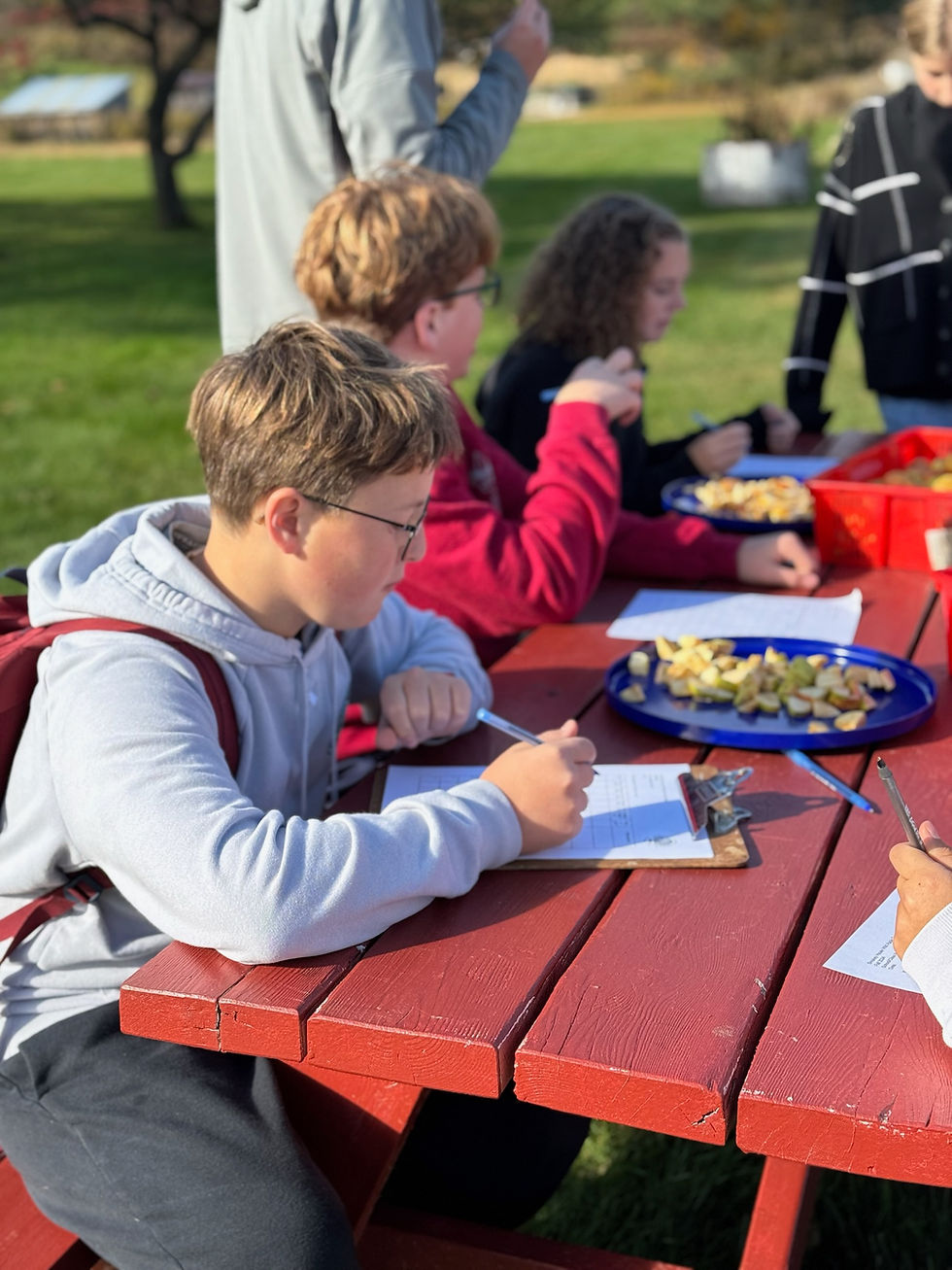
In the fall of 2024, students collected apples from hundreds of wild apple trees growing across Smokey House Center’s valley. Students characterized key traits such as taste, texture, appearance, and sugar content through taste tests in hopes of identifying new varieties that are both productive and resilient to increased climate impacts like drought, disease, and early frost. Each group got to name their favorite apple variety and samples of each winner were sent to a lab for genetic testing.
Apple Genetics Study

In the spring of 2024, students helped to transplant ramps from wild populations at Smokey House Center into our active sugarbush in order to establish new wild simulated forest farming systems. Students also participated in population monitoring and gained skills in field measurements while learning about the benefits of forest farming.
Wild Ramp Study

In this time of reduced school budgets, I was extremely grateful for this opportunity at no cost!
Jennifer, elementary teacher
It was great for them (students) to see how they could get quantitative data out of somewhat subjective observations. I loved they also got to perform and see tests done.
Sean, middle school teacher
Smokey House provides a hands-on experience of life on a working farm. The Smokey House staff are well versed in accommodating students of different learning styles and needs, tailoring their programs to the needs of the population and pivoting in order to meet student needs in the moment if needed.
Michael, elementary teacher


Are you a teacher or homeschool parent who is interested in bringing your students to Smokey House Center? Please fill out our inquiry form or contact Lauren Kelly at lauren@smokeyhouse.org for more information.
Our Saplings to Stewards program runs each spring and fall.